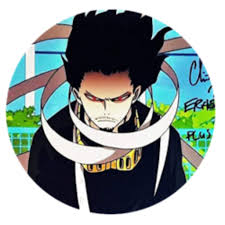

Boruto Two Blue Vortex: Is Kawaki Becoming the Ultimate Villain of the Series?
When Boruto: Two Blue Vortex launched after the highly anticipated timeskip, it completely subverted the traditional power dynamics and heroic tropes of the Naruto franchise. The world became darker, the stakes grew exponentially higher, and the line between hero and villain blurred. At the absolute center of this narrative and ideological chaos is Kawaki.
Once a tragic victim of Kara’s experiments and a cherished foster son to Naruto Uzumaki, Kawaki’s current trajectory has sparked a massive debate across the global anime and manga community: Is Kawaki systematically becoming the ultimate villain of the series?
To answer this, we must look beyond his destructive actions and dissect his psychological deterioration, his twisted sense of duty, and how the emergence of the Sentient God Trees (Shinju) pushes him into an irredeemable corner.
The Madness of Omnipotence: A Twisted Sense of Protection
Kawaki’s descent into antagonism is uniquely tragic because it is entirely fueled by an obsessive, pathological desire to protect Naruto Uzumaki. To Kawaki, Naruto is his entire world—the only person who offered him warmth and a true home. However, this profound gratitude has mutated into an unhealthy obsession.
When Kawaki forced Eida to activate Omnipotence, rewriting the memories of the entire world, he swapped lives with Boruto. In the eyes of the world, Boruto became the traitor who “killed” the Seventh Hokage, while Kawaki became the beloved biological son of Naruto.
Protection Through Destruction
Kawaki’s logic is terrifyingly simple: to protect Naruto, he must eliminate every single trace of the Otsutsuki clan, including Boruto. He is entirely willing to be hated, to lie to the entire world, and to lock Naruto and Hinata away in a timeless dimension (Daikokuten) indefinitely. For Kawaki, a Naruto who is safely imprisoned and alive is better than a Naruto who is free but vulnerable to Otsutsuki threats. This extreme utilitarianism is the classic psychological framework of a tragic villain.
The Contrast After the Timeskip: Boruto’s Maturity vs. Kawaki’s Stagnation
The true gauge of Kawaki’s villainous evolution is how he measures up against Boruto after the three-year timeskip. The contrast between the two is staggering, both in terms of power and mental maturity.
-
Boruto’s Evolution: Despite being hunted by his own village and stripped of his identity, Boruto has emerged as a calm, calculated, and deeply mature shinobi. He refuses to hold a grudge against Kawaki, possesses an immense global perspective, and actively works to save the world from the Shinju threat.
-
Kawaki’s Regress: On the flip side, Kawaki has become deeply insecure, arrogant, and emotionally volatile. Because he relies almost entirely on his Karma and Amado’s scientific ninja tool modifications, he has neglected traditional shinobi training. When confronted by Boruto’s overwhelming new techniques, such as Uzuhiko, Kawaki handles his inferiority complex with rage rather than strategic adaptation.
This deep-rooted frustration makes Kawaki highly dangerous. As the gap between his power and Boruto’s widens, his desperation will inevitably drive him to seek darker, more catastrophic means to achieve his goals.
The Shinju Threat: Will Kawaki Make the Ultimate Betrayal?
The emergence of the Shinju—the sentient, evolved forms of the Divine Tree clones—has thrown the entire world into an existential crisis. Each Shinju has a designated target they instinctively want to consume based on the chakra archetype they evolved from.
For Kawaki, the Shinju present a logistical nightmare. He wants to be the absolute shield of Konoha, yet his lack of cooperation with Boruto and his inability to protect the village effectively is exposing his shortcomings. If the Shinju push Konoha to the brink of absolute destruction, Kawaki may reach a breaking point.
If forced to choose between the survival of the Shinju-threatened shinobi world and a dark alliance that guarantees the safety of Naruto, Kawaki’s track record suggests he would sacrifice the village without a single shred of hesitation. This willingness to burn the entire world to save one person is what anchors him firmly into the role of an absolute antagonist.
Conclusion: The Path of No Return
Kawaki is not a villain who seeks world domination or senseless cruelty. He is a broken soul trapped in a prison of his own making. By locking away Naruto, brainwashing the planet, and hunting his brother figure, he has crossed a line from which there is no peaceful return.
Whether he becomes the literal final boss of Boruto: Two Blue Vortex or meets a tragic end, Kawaki has officially outgrown the role of a mere rival. He is the architect of his own dark fate, and his warped love for Naruto may very well bring about the absolute downfall of the shinobi era.


Comment